How Offshore
Exploration Works
Offshore oil and gas exploration is a complex, high-tech endeavor. This section explains the science and engineering behind finding hydrocarbons deep beneath the seabed, from initial surveys to confirming commercial reserves.
Updated October 2026 · Sources: MECI, operator statements, OilCyprus well records
Explore the Fundamentals
Cyprus operates in a deepwater environment (1,500-2,500m water depth) in the Eastern Mediterranean's Levant Basin. The geology is similar to successful discoveries in Israel and Egypt, with Miocene-age carbonate and clastic reservoirs.
Seismic Surveys
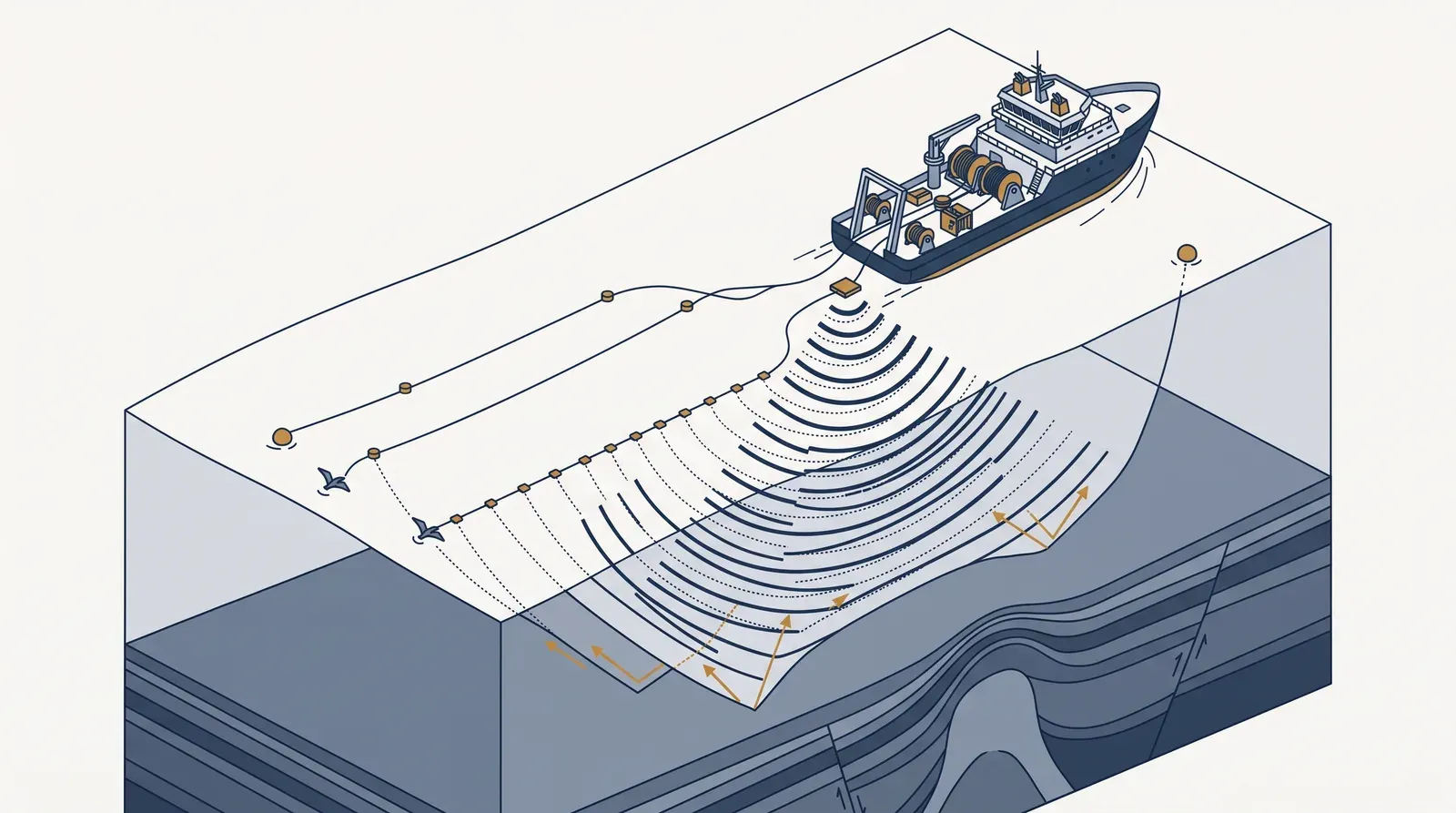
How sound waves map underground structures. 2D vs 3D seismic, data processing, and prospect identification.
Deepwater Drilling
Drillships, blowout preventers, well design, and the challenges of drilling in 2,000+ meter water depths.
Reserve Calculations
How reserves are estimated. P10/P50/P90, resource categories, and what "Tcf" really means.
Industry Glossary
Key terms and definitions. EEZ, Tcf, FID, PSC, and other industry terminology explained.
The Exploration Process
Basin Study
Analyze regional geology and identify prospective areas
Seismic Survey
Acquire 2D/3D seismic data to image subsurface structures
Prospect Ranking
Evaluate prospects based on risk and potential volume
Exploration Well
Drill to test whether hydrocarbons are present
Cyprus Exploration History
Updated October 2026 · Sources: MECI, operator announcements
Learn More
Stay Updated
One email every Monday on Cyprus and East Med gas: what moved, what it means, and what is scheduled next. Unsubscribe is one click in every issue.
Thanks for subscribing!
Something went wrong. Please try again.